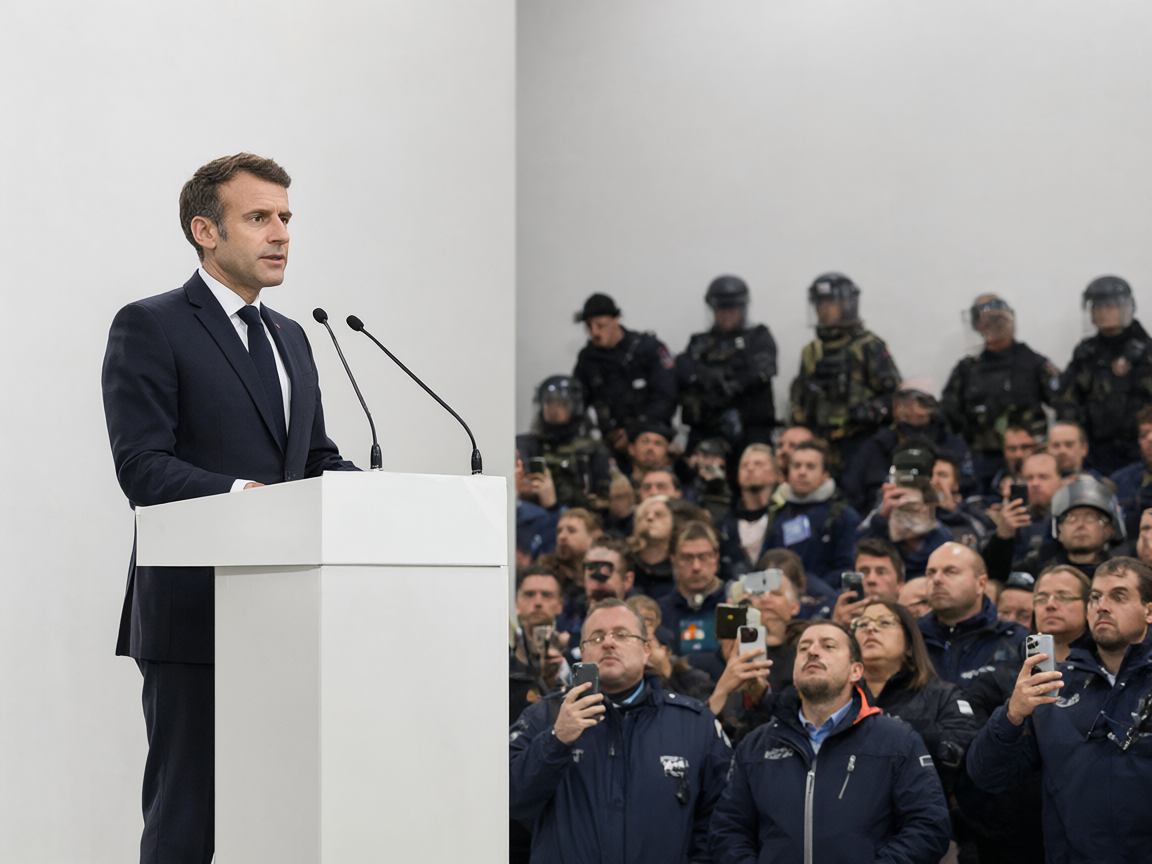
In the early hours of Tuesday, thousands of demonstrators converged on Paris and other major cities, sparking a wave of violence that has left the capital in a state of emergency. The unrest follows months of protests against President Emmanuel Macron's proposed pension reforms, which critics say undermine workers' rights and widen social inequality. Police reports indicate that at least 12 people were injured and several buildings, including the historic town hall in Limoges, suffered fire damage.
The National Gendarmerie deployed armored vehicles and drones to restore order, while the Interior Ministry urged citizens to remain indoors. In a televised address, Macron condemned the violence and called for accountability, stating 'We all feel anger and shame, but we must not let this fracture our republic. ' He also announced a temporary suspension of the pension bill and pledged a national dialogue.
Union leaders expressed relief at the government's willingness to pause the reforms, yet opposition lawmakers warned that the pause could be a tactic to buy time. International observers, including the European Union, have urged France to resolve the dispute through democratic means. The turmoil has rattled financial markets, with the CAC 40 dipping 2% on the day of the protests.
Travel agencies reported a 15% drop in bookings for the upcoming summer season, and several multinational corporations have postponed investment projects in the region. Analysts warn that if the unrest continues, France could face a significant shift in its political landscape, potentially opening the door for more radical parties. The situation remains fluid, and the government is under pressure to balance security with civil liberties.